

Kenai Fjords National Park
Where towering icefields, glaciers, mountains, and ocean meet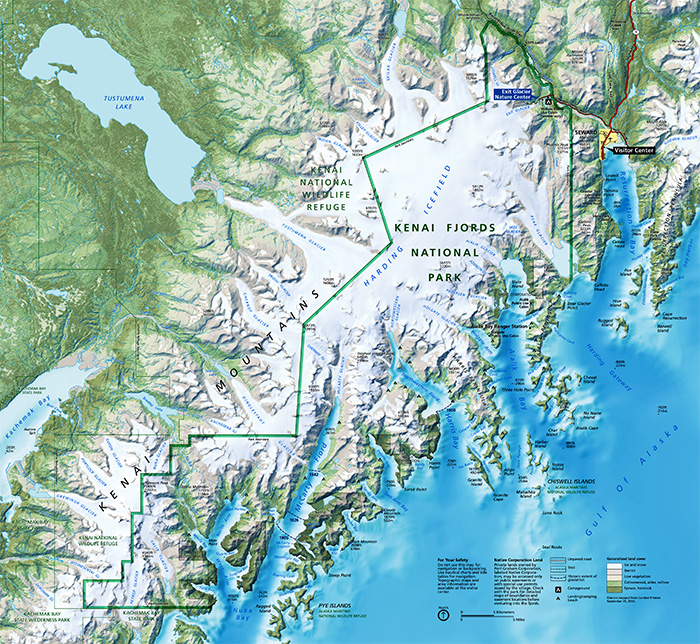
Kenai Fjords National Park was designated as a National Monument by President Jimmy Carter in 1978.
Two years later, just 21 years after Alaska became a state, it was fully established as a national park, encompassing over 600,000 acres of the Kenai Peninsula, located about two hours south of Anchorage. The park offers unspoiled wilderness capped by the Harding Icefield, a relic of past ice ages and the largest icefield contained entirely within the United States.
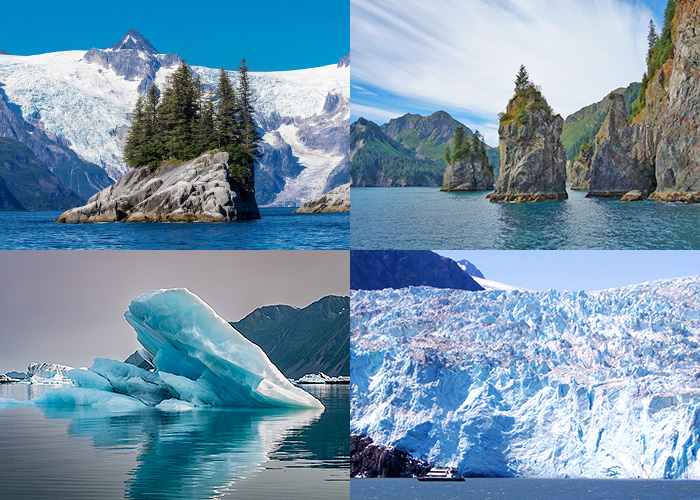
Visiting the Coastal Fjords by boat provides a unique experience not seen from roadways. There are few places in the world where a massive icefield, glaciers, mountains, and ocean ecosystems all meet directly.
Natural Features
Kenai Fjords National Park consists of three main areas: the Harding Icefield, the Exit Glacier area, and the coastal fjords.
The Harding Icefield is the park’s dominant feature and one of the primary reasons for its creation. Visitors can hike to the edge of the icefield via the Harding Icefield Trail in the Exit Glacier area.
Exit Glacier is the only portion of the park accessible by road, providing an up-close look at a glacier. Informational signs along the trail mark the glacier’s retreat in five-year increments, giving visitors a clear perspective on how quickly some glaciers are changing.
Wildlife
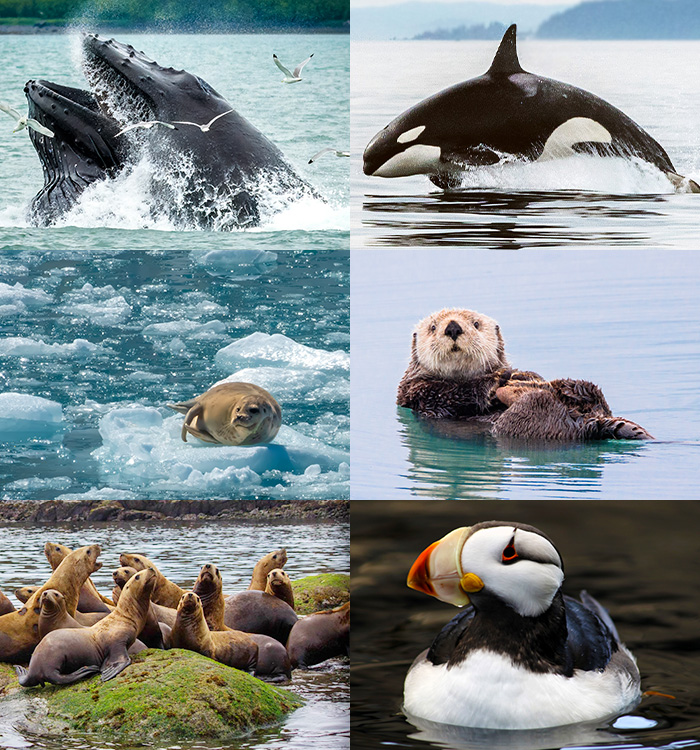
Boat tours give visitors the chance to see wildlife in their natural, undisturbed environment.
Kenai Fjords is home to a variety of whales, including humpback, orca, fin, minke, and the rare Baird’s beaked whale. Other marine mammals commonly seen include Steller sea lions, harbor seals, sea otters, and Dall’s porpoise, with occasional river otters spotted along the coast.
The park also hosts many migratory birds, such as puffins, black-legged kittiwakes, cormorants, auklets, and murrelets. Bald eagles are frequently seen year-round. Land mammals, including brown and black bears and mountain goats, can sometimes be observed along the shoreline or mountainsides.