

Glacier Viewing
Discover the glaciers of the Kenai Fjords and Resurrection BayTidewater Glaciers & Icebergs
Numerous tidewater glaciers are accessible by boat throughout Kenai Fjords National Park. Located at the heads of coastal fjords, these glaciers are the park’s most common type. They terminate at the water’s edge, often creating ice flows through calving, creating icebergs, growlers, and bergy bits.
Often associated with climate change, many of these glaciers have retreated in recent history; however, several are known to be advancing as well. Notable tidewater glaciers within the park include Holgate, Aialik, and Northwestern Glaciers.
Hanging Glaciers
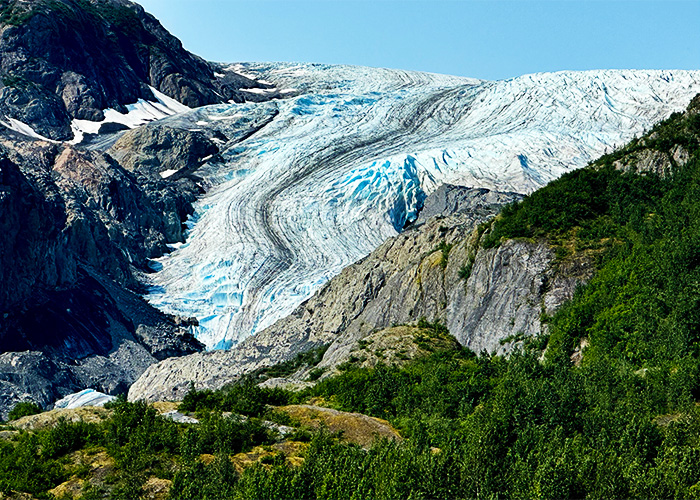
Hanging glaciers are found high in mountain valleys (cirques) and along ridges throughout the Harding Icefield and Kenai Fjords National Park. Characterized by large deposits of glacial ice, they do not reach the mountain base or tidal zones. Instead, they “hang” from mountainsides.
Inherently unstable and best viewed from a distance, hanging glaciers such as Godwin Glacier can be seen along the eastern side of Resurrection Bay.
Lake Terminating Glaciers
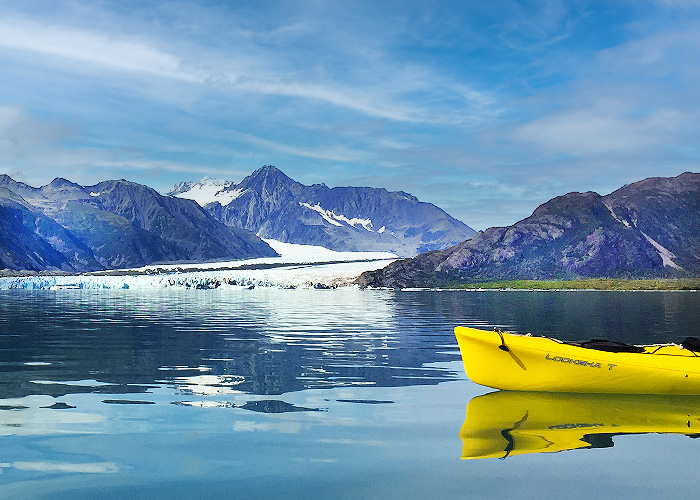
Several glaciers outside Seward terminate in freshwater lagoons. On the western side of Resurrection Bay, lies Bear Glacier – the largest in Kenai Fjords National Park. At three miles wide, it provides an expansive view into the Harding Icefield from the bay.
Unlike hanging or tidewater glaciers, Bear Glacier ends in its own freshwater lagoon filled with massive icebergs, and is separated from the ocean by a moraine. While cruising through Resurrection Bay, Bear Glacier is one of the most photographed glaciers, and its large icebergs are often visible in the distance.
Harding Icefield
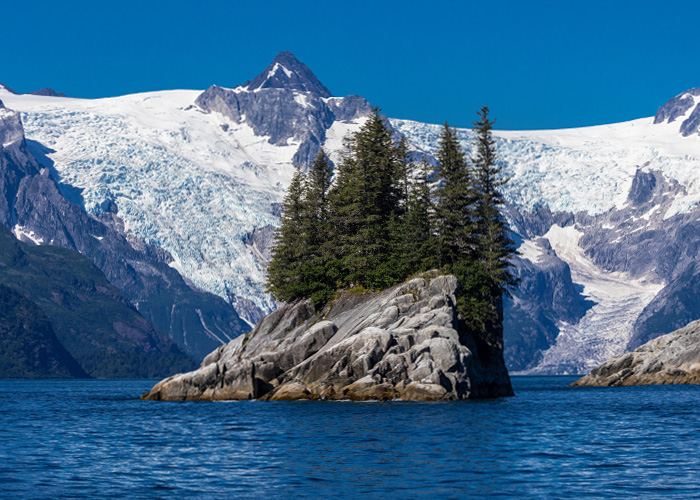
Named after U.S. President Warren G. Harding, the Harding Icefield is the largest icefield located entirely within the United States. Partially within Kenai Fjords National Park, the icefield feeds the glaciers, valleys, and ridges of the Kenai Fjords and the interior Kenai Peninsula.
Receiving over 400 inches of snowfall annually, the icefield covers more than 700 square miles. Due to its remote location, it is best viewed from the sea or on a flightseeing trip with our local Seward Air Taxi. For physically fit visitors, a hiking trail beginning at Exit Glacier leads up to the Harding Icefield and provides a broad view of its scale.