

Whale Watching
Discover the most common whale species of Kenai Fjords National Park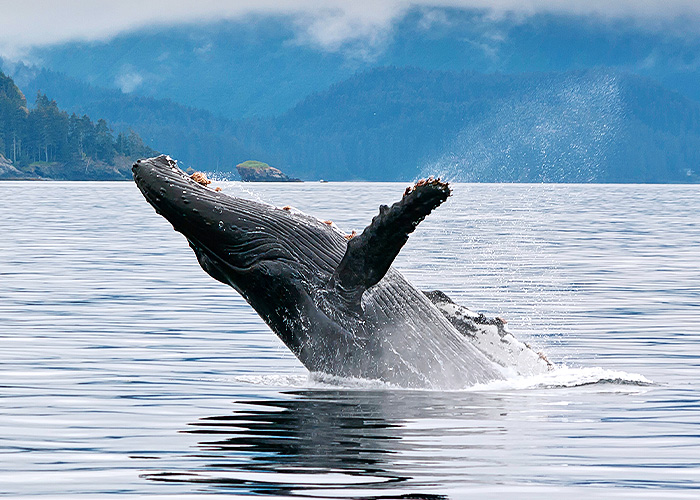
The sheer size of a humpback whale is awe-inspiring. When you catch even a partial glimpse of their body as they slowly cruise along, it’s hard to imagine they can reach 45–65 feet in length and weigh up to 40 tons. They are usually seen alone or accompanied by one or two others, unless they are bubble-net feeding.
During this feeding frenzy, humpbacks work together to create a circular “net” of bubbles that traps schools of small fish such as herring. The whales then lunge upward with mouths open, gulping their meal. As they reach the surface, hundreds of seabirds join in, scooping up leftover fish. If you are lucky enough to witness this event, it will likely be a highlight of your Alaskan vacation.
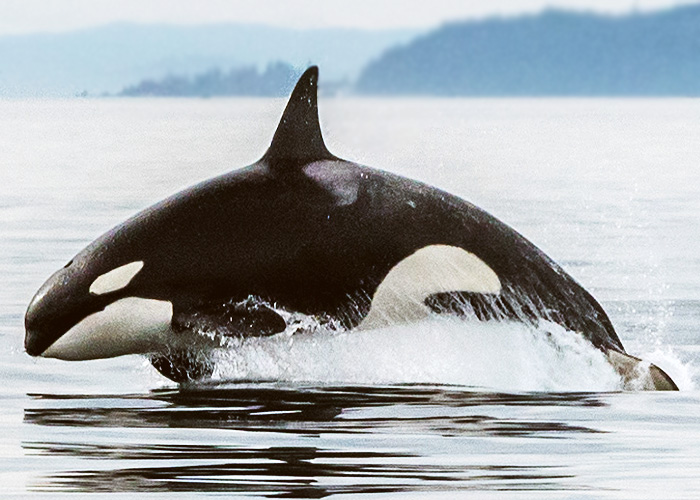
Orca
(Killer Whales)
Orca whales are easily identified by their distinct black-and-white coloring and tall dorsal fins. They can reach up to 32 feet in length and weigh as much as 11 tons. We usually see them traveling in pods, often near the water’s surface, which allows for extended viewing once they are spotted.
At times, orcas swim just below the surface, giving guests a clear view of their striking markings. Other times, they may breach the water, making for great photo opportunities if you’re quick.